


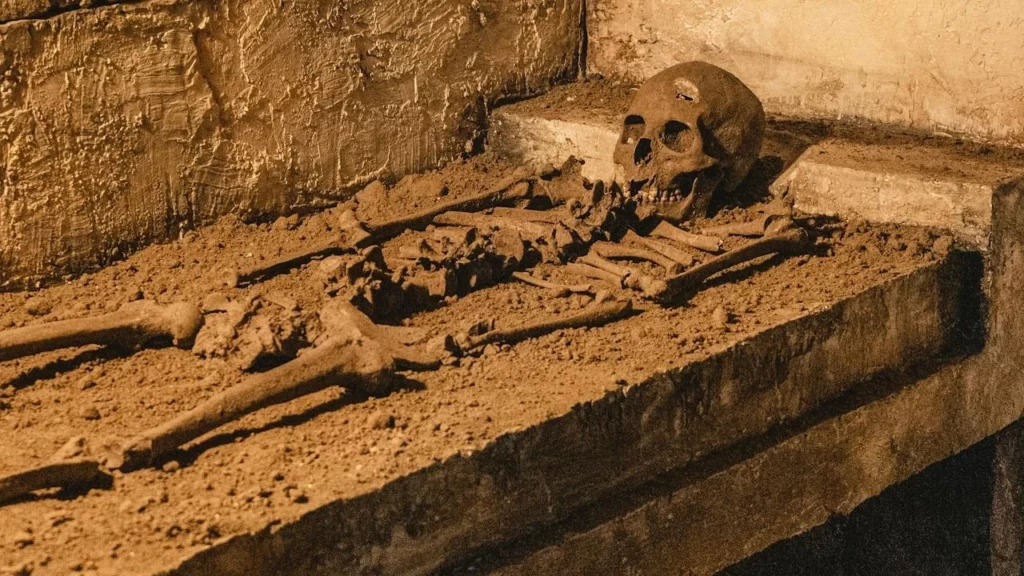
For many, dungeon ecology is what makes or breaks an adventure location. However, in the 50+ years of the hobby, design methods have changed considerably. From monster zoos to dungeons with coherent stories, simulation designs to building around themes, the differences in approach are huge. Instead of a must-use recommendation, groups will likely have to experiment with which one—or combination—suits them best. This could change from campaign to campaign, or even location to location. However, finding the right balance is well worth it.
Dungeon Ecology: Monster Zoo Beginnings
In the early days of tabletop roleplaying games, dungeon ecology was rarely a priority. Adventure locations were often more like zoos. There were lots of different monsters mixed together without any real logic. The decision rested on what the gamemaster (GM) thought was cool or an interesting challenge.
These days, most GM advice is to avoid this type of approach. It breaks immersion and can make players take the game less seriously. However, a lot of players are less interested in careful worldbuilding than many GMs. They don’t really care why there’s an ancient dragon in a cave if they can fight it and win. Some players just want to throw dice and feel cool.
Even in groups who want deep immersion, this approach can still work. Finding a monster in a place it wouldn’t normally be makes players ask questions. Why is there an ancient dragon in this cave, of all places? If answers eventually come, and it doesn’t happen too often, GMs can mix up gameplay and deliver narrative surprises, too.
Monster zoos were popular in the early 1970s; however, my own first dungeons in the 90s were very much like this… And, if I’m being honest, impulsive fun still occasionally wins over careful worldbuilding. Sometimes it’s just cool to play a dragon (or a hag, or a super death robot).
A randomly chosen monster can add a burst of variety and surprise. Finding the right balance—not doing it too often for the group’s tastes—is the only real concern with these creatures. By choosing only monsters the GM is excited to play, the enthusiasm shines through at the table, boosting the fun. As long as the group enjoy the encounter and the game keeps flowing, it’s all good.
Dungeon Ecology Starts to Make Sense
In 1979, Jennell Jaquays released The Caverns of Thracia. The caverns were once an ancient reptile civilisation’s centre of power. However, since then, humans and later beast men took control. The reptiles built the place, but the humans and then the beast men each changed the designs to suit their needs.
The reptiles want to get rid of their old enemy, the humans, from their holy place. The beast men want to attack the humans out of revenge and for food. Therefore, they make an alliance. In turn, humans want the reptiles and beast men gone. While the humans were in control of the caverns, it became a holy place for them, too.
Taken together, this was a big shift in mainstream design thinking. Suddenly, dungeons had complex histories that affected the story and player experience. Monsters worked together in understandable relationships. Additionally, these monsters didn’t just form logical groups, they created factions at war with each other for narrative-based reasons.
Thracia gives players huge amounts of freedom on how to interact with the location. Multiple entrances, multiple paths, many potential non-combat encounters, and interesting factions to manipulate or help. Plenty of people in the OSR community see this as the gold standard of adventure location design. Kelsey Dionne, designer of Shadowdark, has said she would love to adapt Thracia for her smash-hit system.
History Dictates Choice
Consider a monster zoo dungeon example with goblins, skeletons, basilisks, and fire giants. This could be a lot of fun if nobody cares why they’re all together. Story could explain why, but it would need a lot of work from the GM.
In contrast, the approach championed by Thracia would put skeletons with zombies, wraiths, and other undead. There are fewer questions why these types of monsters are co-existing. Most importantly, the location reinforces this coherency. The monsters are in the dungeon because of its history.
In Thracia, the reptiles and the beast men are in the dungeon—and are allies—because it suits Jaquays’ narrative. If the reptiles hadn’t built the dungeon, or wanted to clear it of human corruption, they wouldn’t be there. Similarly, the beast men also want to get rid of the humans for enslaving them in the past. There is even the extra detail the beast men are the most numerous threat; the other groups lost many of their numbers in previous wars.
Thracia does have some monster zoo-like encounters. However, Jaquays provided explanations for each of these, showing dungeon ecology was a constant concern throughout design. In one instance, a huge web stretches over a river near a reptile settlement. Jaquays admitted this may seem strange considering the location, but defends it as a marriage of tolerance; the giant spider lets the reptiles pass along the river because they offer it captured humans to eat. In return, the reptiles have a constant guardian for their settlement that lets them use the river without interference. This may sound familiar.
Building a Logical Dungeon Ecology
The location’s history is the most important factor when deciding what monsters to use. The dungeons that stay in players’ memories will have more unusual or interesting monster combinations.
One of the most effective ways to add detail is to have the location’s owners change. Each group taking control will redefine how rooms get used. New owners may block off rooms, enlarge them, or create entirely new areas. The redesign reflects what’s important to them, and what they fear.
Historically, one Emperor of Rome covered the imperial palace walls with mirrors because he was so afraid of assassination. In Scandinavia, it was common practice for newly-converted Christian kings to destroy old Norse temples, building churches over the foundations. This accelerated getting rid of the old ways, while simultaneously redirecting local religious significance attached to the location.
The best dungeons keep traces of the old owners. As the PCs explore, they begin to learn the dungeon’s story, and it directly affects gameplay. Many players won’t care too much about environmental worldbuilding until it translates into dangers and rewards for their characters. For instance, ancient reptile stonework often leads to secret rooms and powerful magic items; or, goblin builder quality is poor and often leads to collapsing floors or walls. When environmental storytelling combines with direct effects, the dungeon’s story becomes much more powerful.
Dungeon Ecology Turns Realistic
If adventures like Thracia were a revolution, the next change was much more evolution. By the 2000s, dungeon ecology had become laser-focused on realism. Dungeons now needed more than just interesting history and coherent monster choices. Dungeons needed internal logic and natural resource flow. By this, I mean the monsters needed enough food, water, and other supplies to make living long-term in an area realistic. Monsters needed toilets. Mushroom farms exploded in popularity in underground locations. Monte Cook’s Return to the Temple of Elemental Evil in 2001 and AEG’s 2004 World’s Largest Dungeon are great examples. In these dungeons, everything tries to make sense biologically, socially, and geographically.
GMs following this approach will want to consider the resources the monsters will need to survive. Food, water, and waste disposal will be top of the list. Anything the dungeon cannot sufficiently provide, the local area will need to make up for. This can be a great source of foreshadowing; PCs can find out what the monsters need and perhaps how they attack. There might even be an early encounter if PCs find the monsters mid-foraging.
Foreshadowing can also happen if players understand what is missing from an area. For instance, in the real world, great white sharks will completely abandon favoured hunting grounds if orca enter the area. If a white dragon loves hunting big game, the PCs may notice nothing larger than a fox is around.
Details, Details, Details!
More complex dungeons can answer more questions. How do the monsters treat their dead? How does breeding affect the group? Do the communities prepare for seasonal changes like harsh winters, intense summers, violent storms or flooding? Civilised groups will have more needs: social gathering spots, religious spaces, areas of production and storage. Perhaps there are transport networks. Is everything available to everyone?
The relationship between groups can also have more detail. Are groups hunter-prey? PCs commonly encounter the prey first as a way of foreshadowing the hunters’ abilities. However, a more socially complex game might involve meeting the hunters first. They can put an image of the prey in the players’ heads; this then fuels assumptions the players will have to reckon with later.
Real Life Inspirations
Are the groups symbiotic? In the ocean, pilot fish swim with sharks because the bigger fish scare off predators and help ensure food supply. In turn, big sharks cannot easily clean themselves, so the parasite-eating pilot fish keep the sharks healthy.
Is one group parasitic? Zombie-ant fungus infect ants with spores. These brainwash ants, forcing them to climb trees to optimal height for fungus growth. The fungus then makes the ant lock onto the tree until death, letting the spores grow in perfect conditions. When ready, the spores burst and spread through the air, infecting more ants below. For dungeons based on realistic ecology, the world is full of awesome—and creepy—inspiration.
Factions at Play
Factions hostile to each other will need buffer zones—no man’s land—between them. These will help keep exploration in balance with the combat and/or social encounters. They are also a good opportunity for PCs to find loot and foreshadow faction tactics.
Factions who have been friendly for a long time likely have established meeting areas. They may even have converted some of their own territory to accommodate the other’s values and beliefs.
The Trap of Realistic Dungeon Ecology Design
It can be easy to get lost in the detail. For GMs that don’t get stressed over player engagement levels, this can be a really fun creative exercise. I’d advise to try and keep the players’ experience always in mind, though. There is a risk of focusing too much on believability and losing player interest. In his book Against Worldbuilding, and Other Provocations, Alexis Kennedy points out most characters in movies and video games don’t use toilets. “Toilet breaks don’t happen…unless a henchman is conveniently distracted so you can assassinate him.” Unless the room affects the players—and they can do something cool there—it can probably be skipped.
Theme-Based Dungeon Ecology
If the early 2000s were a historical documentary, current-day design is more like a Hollywood movie. By this, I mean commitment to realism got swapped for focus on emotion and theme. For instance, the PCs are exploring a lich’s dungeon. The corridors are narrow; the ceilings are low; skulls decorate the walls. This doesn’t need to make architectural sense, it’s to reinforce the feeling of claustrophobia and the theme of death.
One example of this style is Ben Milton’s brilliant The Waking of Willowby Hall. The setting is a manor under attack by an angry giant. The giant is furious at the theft of his magic goose, but his attacks are waking up a death knight inside the house itself. The adventure’s themes are the decay and renewal, memory, and wonder. Every room contributes to these themes and the feeling of panic. Rooms shift and events change depending on if the house is restless, or awake. There is a constant sense of chaos because everything is so unstable.
Partly because it’s a manor, there are rooms like a breakfast room and a music room. However, Ben has little interest in recreating a historically accurate layout. Instead, he includes these rooms because they can reinforce the themes of the adventure. Likewise, the monsters included further emphasise these themes as well as add to the chaos.
Themes and Emotions
Details and monsters match the feel of a location instead of providing strong realism. Anything that expresses fear, sadness, horror, joy, calmness etc. are important in this design approach. Realistic elements are useful to ground a location—making it more believable—but the narrative’s emotion and themes are bigger priorities. A dungeon’s theme may reinforce the campaign’s, or it might be its own side-story.
Groups centred around narrative will feel very comfortable with this style of dungeon design. Similarly, adventures that want to feel dream-like or whimsical are perfect because ambiguity is no problem. However, more detail-focused groups can find these locations too surreal, too lacking, for immersion. As with all of these methods, finding the balance will be different for each group.
Choose What Works Best for the Group
I would be surprised if a GM is 100% monster-zoo, coherent dungeon, simulation, or theme-focused—though never say never. I think it’s more likely, and probably more fun, if the GM is a mix. All four have their pros and cons. Coherent dungeons connect the players to fascinating histories giving the world depth and the PCs a place within it; simulation elements boost immersion and more easily inspire plot hooks; theme-based dungeons evoke strong emotions and powerful scenes; even out of fashion monster-zoos can create free-flowing fun.
Ultimately, my biggest recommendation is to use what works best in the moment. None of the approaches are perfect, so none of them should stop GMs from using others. Have a play and see what works best in the next location. Above all, have fun!


