

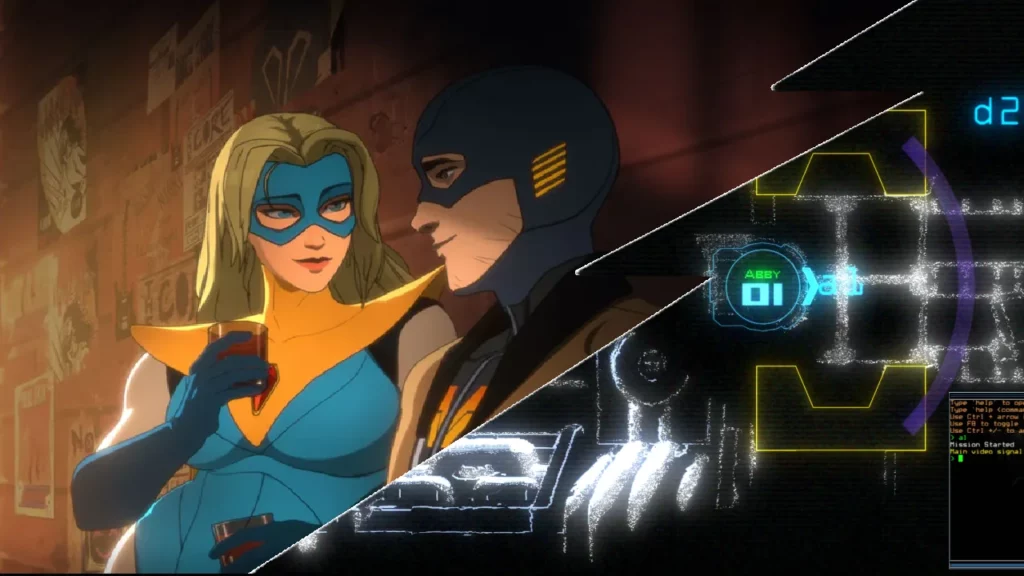
At the centre of tabletop roleplaying games is a source of tension. It focuses on what is, for many, a major part of the fun. This is, of course, how stories unfold at the table. It’s the argument between narrative authority and player agency. In a sense, it’s epic narrative versus emergent story.
In the Beginning, There Was Only Emergent Story
Older gamers—and readers familiar with Jon Peterson’s The Elusive Shift—will know grand narrative never really featured at first. These days, with the recognition and popularity of Critical Role and Dimension 20’s style of play, this may sound crazy. However, TTRPGs’ roots are in tabletop wargames.
…What Is It Good For?
For over a century, wargamers have come together with forces of miniatures. Then, with tactics and dice, they find a winner. During a game, stories of incredible bravery, skill, and luck play out. Warriors engage in deadly combat, heroes duel, and fighters sacrifice themselves, or swear bloody revenge. However, these stories are nearly always unplanned.
Wargamers do not wrap their soldiers in plot armour. A commander is often as fragile as their most basic warrior. What’s more, the dice lead the action. Swords swing and guns fire; ultimately, nothing can save a warrior except for the roll of the dice.
If this sounds straight from the playbook of an OSR system, it is. It’s emergent story in another format.
Objective Fun
Another part of the fun in wargaming is each player—in theory—wants to win. Thus, a pre-planned outcome simply doesn’t work. There can be no grand plot that guarantees one player’s winning over another.
Of course, in reality, things are a little more complicated. As with TTRPGs, there are plenty of wargamers who meet up just to roll dice and have some laughs. So, it would be wrong to think every game is pure competition.
Additionally, cinematic—or narrative—games, where one side has a huge disadvantage, have a strong tradition. Much like in this article, the factions get different objectives. All the players—and there may be more than two—can still get victory; but the game pushes them to do something different, not just wiping out more than they lose.
Even systems with campaign options, playing out extended narratives, cannot have a pre-determined winner. The players fight a series of scenarios, linked together. Usually, these battles lead to a dramatic, final confrontation, with each previous victory giving some kind of advantage.
Grand Narrative’s Green Shoots
With all this in mind, it’s perhaps less surprising grand narrative took so long to assert itself over emergent story in TTRPGs. As the hobby established itself, developers made more and more adventures. These sometimes linked, and then lore came along to make it all fit together. It was really only by the 1990s that developers could comprehensively mirror inspirations like The Lord of the Rings and Dune. Official lore like the Forgotten Realms developed mountains of worldbuilding. Gamemasters (GMs) could dive into these worlds, or plunder them to build their own. In either case, it became the standard blueprint.
Parties were no longer exploring dungeons, just trying to stay alive and get cool stuff. Instead, they were moving in massive worlds that lived and breathed; these spaces had long, storied histories—hopefully some weird stuff included. Developers nudged GMs to go beyond evoking mere moments. Now, the party were going all the way to Mordor.
For so long, people like Tolkien and Herbert had been—and still are—massive influences on the hobby. Looking back, the evolution towards copying them more fully feels inevitable.
And, by extension, so was the desire to control.
Sam and his heavy burden only get to Mount Doom by sticking to the plot. Paul Atreides must stay on script for his epic duel in Arrakeen. If the party want to battle the arch-nemesis at the climax, they must follow the GM’s plan. It’s an awkward truth, but the chaos of emergent story design makes it terrible at telling consistently terrific stories. It’s here I focus on the video game Dispatch.
Story Through Limits: Dispatch (very light spoilers)
Released in late 2025, Dispatch is a game made by the old members of Telltale Games, now AdHoc Studios. They teamed up with the money and the talent of Critical Role to create a brilliant game.
You are loosely in control of Robert, a dispatch operator in charge of some ex-supervillains. Each reforming supervillain on the team has their own personality, problems, and superpowers. Robert guides them on their path to becoming true heroes. However, he has no special abilities, something he struggles with for much of the game.
The player is always one step removed from the action; going through the cutscenes, never sure what will happen next, strongly mirrors Robert working from his desk. The game’s excellence—in my view—comes from the acting, art direction, and writing. Especially the writing. I can’t remember the last time a game had me belly-laughing so many times. For the article though, I want to focus on its narrative design.
First, the game breaks down into a standard story structure: three acts plus a prologue. The prologue drops our protagonist from powerful to weak. The next two acts build him up to knock him down again. The final knockdown of act two is particularly hard. This is standard scripting; it amplifies the emotional fulfillment when the player completes the third and final act.
The ending can play out in a number of ways. This is reflective of Telltale/AdHoc’s style of tracking player decisions through the game; they record all the protagonist’s choices, with many of them influencing other characters’ actions. In the final scenes, the player can see the results of all this, for better and for worse.
Quantum Ogres
To a point.
I love exploring everything a good game has to offer. On my second playthrough, I actively chose very different responses. And yet, nearly all the same story beats—key narrative moments—were still there.
In one instance you meet a character in a bar who has an unhappy history with Robert. As he’s getting more and more aggressive, you have a choice to throw water or vodka at him. You have to escalate the situation. And you have to physically mark him—he’s going to lose either his eyebrows or a tooth. So really, there is no choice. It’s a quantum ogre. The game needs this character to have a recent source of anger for a later story beat. Therefore, the results are the same.
In another instance early on, Robert is helping a different character in a fight. The player has the choice of ordering her to directly attack a villain, or help a civilian. But again, there is no real choice here. She always chooses the other option; the enemy always escapes, and the civilian always gets injured. Too much of the story rests on the character disobeying Robert, so this cannot be a meaningful choice. This lack of agency is completely counter emergent story design. So, the question then comes: why make it a choice at all? Why railroad the player so hard?
System Shock?
Dispatch isn’t interested in themes of free will. It’s not trying to be Bioshock Infinite; that game is constantly asking if two paths lead to the same destination, does choice matter. It’s continually giving the player two paths, two reactions, two answers to choose from. But the end results are always the same: there’s always a lighthouse, always a man, always a city.
On the other hand, Dispatch is interested in dealing with failure, are second chances worthwhile, and what it means to be a hero. And the game does a great job of exploring these. However, this doesn’t answer why give a choice when the outcome is the same either way.
Limiting Factors
Here, let’s acknowledge some real world limitations. Namely, AdHoc do not have infinite resources. Every alternative choice needs extra cutscenes, and these cost more time, more money. Some early choices affect later events, so this increase goes up exponentially the longer the game goes on.
However, a wide number of choices also causes problems narratively, too. There is simply no way to give every outcome equal attention and the same emotional high. The more endings there are—significantly different, not just cosmetic changes—the likelihood of “weaker” endings increases. Consider if a new player going through the game gets a weak ending. Are they likely to replay it? To leave positive feedback, or buy the next installment?
Instead, AdHoc do the best thing for the story. They cut player choice just enough to ensure narrative quality. By limiting the story to just three endings, they keep each one strong. There are some bumps towards the end, keeping those different story threads together. But, overall, I’d argue they do a brilliant job. Whichever ending a player gets will likely leave them having had a great time, and curious to play more.
So, returning to my question: why give a superficial choice? My guess would be to keep the player engaged with an intense scene; it tries to make the next confrontation between Robert and the other character more personal to the player.
But in actual fact, there is a bigger truth here. Counter to popular theory in the world of TTRPGs, a well-disguised railroad can deliver an amazing time.
Railroading Is What Now?!
Let me clarify. Some players are willing to give up a certain amount of agency if the fun factor is high enough. I had one player who just wanted to be along for the ride. They didn’t want to lead the story, or dictate events. They wanted control over their character options, choices in combat, and they wanted any roleplaying decisions respected. The world had to react believably and fairly. But gaming sessions were their chill time, and they didn’t want me constantly hammering them for story guidance. They didn’t want to give up all their agency, but defining and reshaping the world wasn’t appealing to them.
I think a lot of TTRPG players find this style of GMing fun. I’d pitch Matt Mercer is a great example for how effective this approach can be. Especially during season one of Critical Role, he seemed to have a north star guiding the overall story; Matt never ignored his players decisions; however, there was often an end-point he was aiming for while weaving in the player characters’ pasts and present. There’s simply no other way to foreshadow events so often, with so few hints going unfulfilled. It’s not the only way Matt GMs, but he’s extremely good at it.
And I think it’s fair to say the players loved it. In part, because they trusted him. Of course, they knew he respected their characters. But, perhaps more importantly, he is a wonderful storyteller. They, like many players, and like the Dispatch community, felt reaction, not action, could deliver a great experience in the right hands. The emotional highs were worth the trade.
Epic Risk/Reward
Recalling the widespread influence of Tolkien and company, it’s no wonder many people love the idea of being in a similar epic. However, railroading isn’t a positive word in the hobby. It’s a fine art, judging how much agency to give and take. There’s a long history of over-eager GMs pushing stories they want to tell at the cost of all else. It’s unsurprising so many experienced gamers are wary of engaging with epic campaigns. They come with a definite cost—and for some that will always be too high.
There’s also the massive time commitment. Real life has cut many campaigns short before they reached that final payoff. Epic stories—game, book, or film—stake a lot on the conclusion. Losing it kills a central reason for doing them in the first place.
Burnout is a risk, too. There’s a lot of pressure, handling all those short-, medium- and long-term story beats over such a long time frame. Prep time increases, and the GM has to keep more things in mind while a session is in play.
An alternative? If Dispatch is at one end of the spectrum—grand narrative—then something like Duskers is at the other. This is emergent story design, or discovery play.
Emergent Story Through The Gaps: Duskers
Duskers came out in 2016, but is still a worthy champion of the indie gaming scene. The player is another operator, much like in Dispatch. However, in Duskers, the protagonist is you, and there is much more immediate control.
Waking up on a ship running out of fuel, the protagonist has three drones at their command. The drones board derelicts—drifting abandoned ships—partly to find answers, but mostly just to survive. The drones don’t talk or have any real character. It’s on the player to personalise them—if they want to.
Each time the player docks with a new location, a data log downloads. Many of these are corrupted, offering no useful information. Some are personal messages to friends or family, simple requests or sharp cries for help. Others are from people trying to figure out the causes for the disaster.
Dispatch’s information is a constant flow, pushing the narrative along, never leaving space for player creativity; Duskers’ sparse lore fragments often don’t even connect. There are no other sources of information. That’s a lot of blank space to fill. Whatever interpretation the player comes up with, the game will almost definitely support it; the gaps are an open invitation for story invention.
Emergent Story Elements
The derelicts are not safe. Enemies and the environment can all doom a drone. Lose all your drones, and the run is over. There’s nothing else to do but press reset and try again.
The life expectancy of a drone is determined by tactics and a lot of luck. In theory, one drone is as replaceable as another. However, over time, gameplay builds moments of anxiety, discovery, triumph, and tragedy that build story. The longer a player survives, the bigger the story. When a run ends, the player can go again and make new ones.
However, by design, they will almost never hit the extreme highs of something like Dispatch. There’s no narrative base—nothing like a three-act structure or similar—of any kind; there’s just no knowing how long the player’s run will last to do so. Without the planned highs and lows of a good script, Duskers instead delivers narrative potential, rather than story fully-formed. The parallels with both wargaming and OSR-influenced games are easy to see.
Pros & Cons
There’s some overlap with my articles on running West Marches games, Shadowdark and Pirate Borg reviews here. In many ways, the Duskers’ style of storytelling is a lot more flexible, and more resilient, than epic campaigns’.
You can explore a derelict in about ten minutes. The TTRPG comparative is a one-shot, or an adventure over three to four sessions, versus a multi-year campaign. The former reaches a satisfying conclusion far more often than the latter. It’s also a lot easier to pull people into a game without pressures of super long-term commitment.
In emergent story design like Duskers, mistakes can always happen. Depending on the system, these can wipe the party. A game running on rails, like Dispatch, should find this much less of a problem. Encounters match characters’ level unless that’s the point, narratively. There are no mistakes in Dispatch, only consequences; however, the rails are always there: AdHoc have designed and selected outcomes that match their narrative intention. The player cannot make a mistake only because there isn’t one available to choose.
Easy Come, Easy Go With Emergent Story Games
The flip-side of this is games like Duskers deal with difficult events—like character death—more easily. Even in the event of a total wipe, the player can hit reset and be playing again within seconds. Games like Shadowdark and Pirate Borg have lightning fast character creation because a player not playing is a disaster; a player losing a character is not. Backstories can provide talking points; however, it’s usually better to focus on in-game events, interpreting the dice into moments of glory or horror.
The advantage doesn’t cover just character death. If a theme, location, or NPC isn’t working, it’s much easier to change; there’s no long-term plans that need to happen. Robert doesn’t have to throw water or vodka at someone; the player can choose their response freely. On the other hand, epic narratives get badly derailed by unexpected character deaths. They can even struggle if a player with an important character can’t attend a session.
Story in Chains Or Chaotic Mess?
AdHoc have all the questions and the answers ready for the player. There are no situations without a workable solution. Assuming communications never break down between the GM and players, there should be no dud moments in a grand narrative. In theory, the players should always know what to do, and have the means to progress. It’s unlikely GMs running an epic will have 100% of the details worked out. However, there’s pressure to have a direction constantly in mind, and that will only increase as the campaign goes on.
Discovery play, like in Duskers, puts questions to the player that might not have answers. Loot, encounters, and even adventure-location layouts can all be random or have no obvious fit with what has happened before. Some groups will see these gaps as something they can fill with their own ideas; others will see a disjointed experience that breaks their immersion, and their fun.
Emergent Story Vs Epic Narrative Is Agency Vs Authority
And this is the tension at the centre of the hobby: narrative authority versus player agency.
For some, the chance of playing an epic is the best way to game. The call of a two-year campaign—its emotional highs, lows, and deep character exploration—too strong to resist. Players will likely have a GM they trust; they are more willing to give up some agency because of the promise of that awesome finale. These GMs are likely gifted long-form storytellers; they balance letting the characters shine with moving the narrative ever forwards.
I think a game like Dispatch will suit these gamers almost perfectly. The carefully crafted narrative structure, exploration of character, and tightly scripted scenes make a great package.
However, for other groups, Duskers may be the game for them. People who don’t know how long they can play for, or want just a quick game fall here. Where some people see great writing in Dispatch, others will see restrictions on creativity and player agency. Some people just love gaps. Often, the payoff isn’t in one major climax at the end either, it’s all the little moments along the way.
Real Life Factors
I’d argue it’s easier for discovery play to handle a broader range of gamer types mixing and having fun, too. Epic campaigns demand a certain type of discipline, focus, and togetherness that isn’t always easy to find, or, indeed maintain. Additionally, there seems to be much less burnout in groups running these kind of games; from experience, I know they took a lower brain tax to GM than the big sprawling campaigns I’ve run.
However, some groups look at the chaos, the gaps, and the sparse character sheets and feel it’s not for them. Dispatch and epics like Critical Role season one only hit those incredible highs because they aren’t controlled by whim. There is a talented storyteller—or two, in the case of Dispatch—who is gently guiding events. And sometimes, after a long week, just meeting friends, rolling dice, and having some laughs are what’s needed; even creativity gets tapped out eventually.
One final note: discovery gaming can be railroaded in the worst way as easily as any epic. Dungeons with one route through them are an example. Procedural events forced in no matter what is another. Similarly, epics can have awkward scenes or dud events if the GM misjudges the table or the players focus on the wrong details. Anything can go wrong, no matter the style. So, it’s important people don’t get too precious, are compassionate over mistakes, and have the strength to try again.
Emergent Story, Grand Narrative, Or Both?
I hope it’s clear, but I love Dispatch and Duskers equally. I enjoy them for very different reasons, in very different ways; just as I love an epic as much as a one-shot or West Marches style game. They are two very different approaches to storytelling, and both of them have strengths and weaknesses, for gaming and story-crafting.
Some groups will be happier playing one style more than the other; however, I suspect most will lie somewhere between the two. The spectrum is wide and it may take time to find a sweet spot. I’d also be surprised if that balance stays the same for every session, and every campaign.
As always, experiment and find what works for the group.
Have a lovely day!


